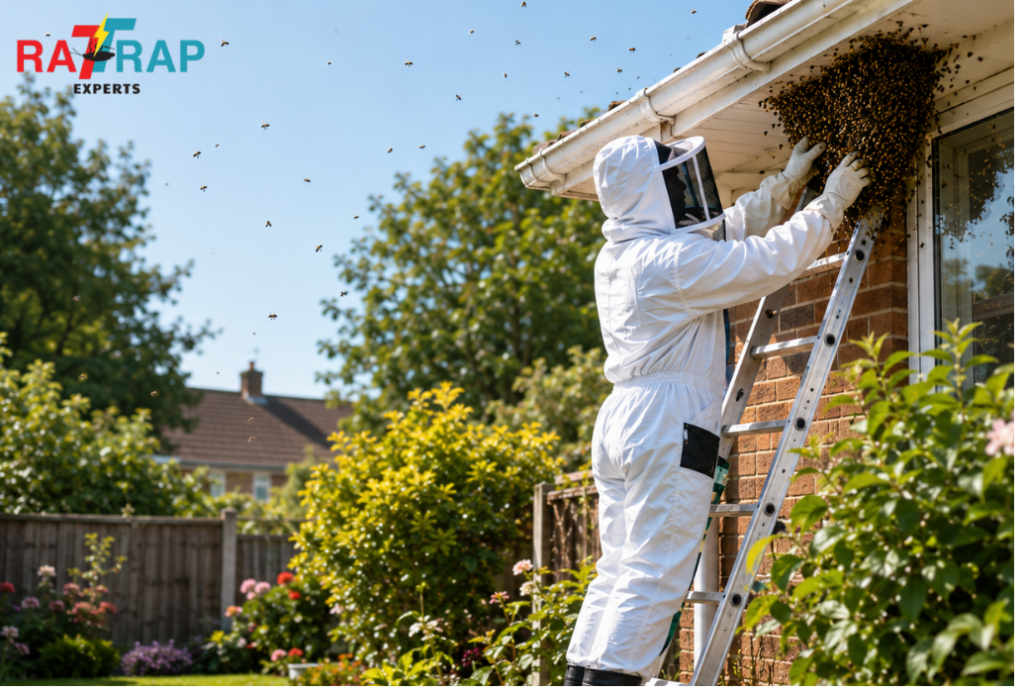
If you find a bee swarm on your property in Hornchurch, the safest approach is to keep people and pets away from the area, avoid spraying or disturbing the swarm, and contact a professional bee swarm removal service. For safely removing bee swarms in Hornchurch, a licensed technician can assess the situation and determine whether the bees can be safely relocated rather than destroyed. Bees are protected pollinators, so professional relocation is preferred whenever practical. Unlike wasp nests, which usually require full removal, bee swarms should be handled carefully and humanely.
Why Bee Swarms Appear in Gardens Across Hornchurch
Spring and early summer is peak swarming season across East London, including Dagenham, Chadwell Heath, Becontree and neighbouring Romford and Ilford. A swarm happens when a colony outgrows its original hive and a group of bees — often thousands — leaves with a queen to find a new home. Swarms can temporarily cluster on tree branches, fences, sheds, or even car mirrors while scout bees search for a permanent nesting spot, such as a wall cavity, chimney, or roof void.
A swarm looks alarming, but it’s usually calm and non-aggressive — bees in a swarm have no hive to defend, so they’re focused on protecting the queen rather than attacking.
What to Do If You Find a Bee Swarms in Hornchurch
- Keep your distance. Stay at least a few metres away and keep children and pets indoors or away from the area.
- Don’t spray insecticide. This can agitate the swarm, cause bees to scatter into the property (like wall cavities), and harms a protected pollinator species unnecessarily.
- Don’t try to knock or hose it down. This is one of the most common causes of stings — a disturbed swarm can become defensive very quickly.
- Close nearby windows and doors if the swarm has settled close to the house, to stop bees moving indoors.
- Note how long it’s been there. A swarm resting temporarily (a few hours to a couple of days) is very different from bees that have already begun building a nest — this affects how it should be handled.
What NOT to Do
- Don’t attempt to remove or relocate the swarm yourself, especially at height (roofs, chimneys, guttering)
- Don’t block the entry point if bees have already begun entering a wall cavity or roof space — this can force them to find another way into the house
- Don’t use DIY sprays bought online — many are ineffective against a full swarm and can make the problem worse
When to Call a Professional
You should contact a pest control professional if:
- The swarm has been in place for more than 24–48 hours (a sign they may be settling, not just resting)
- Bees are entering a wall, roof, chimney, or cavity
- The swarm is in a high-traffic area — near a front door, garden path, or children’s play area
- You or a family member has a bee allergy
- The swarm is at height and inaccessible without proper equipment
A professional can also tell the difference between honeybees, bumblebees, and wasps — treatment (or non-treatment) differs significantly between each, and misidentifying a wasp nest as a bee swarm (or vice versa) can lead to the wrong approach entirely. Rat Trap Experts provides professional pest identification and treatment services, helping ensure the right solution is used for the specific pest problem.
What If Bees Are Inside Your House?
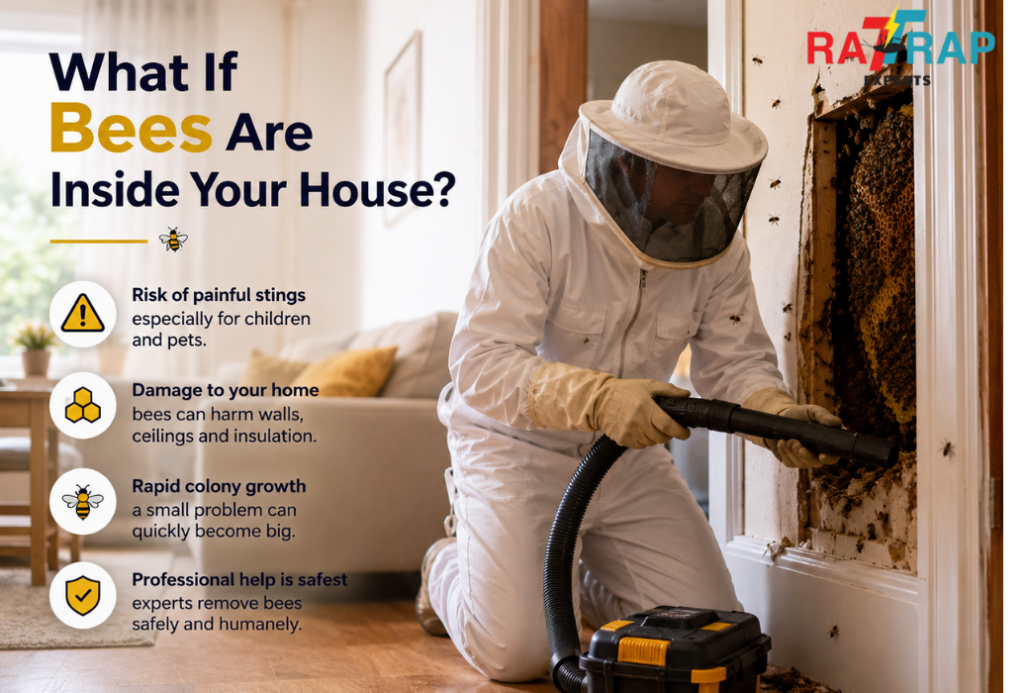
This situation is different from finding a temporary swarm outdoors.
If bees are entering through a gap in your roof, wall, chimney or another opening, they may be establishing a colony.
Do not block the entrance immediately.
Blocking an active colony’s entrance without addressing the bees inside can create additional problems, including bees looking for alternative exits into the building.
Instead, contact a qualified bee-removal professional who can inspect the situation and advise on the appropriate next step.
How Can Homeowners Prevent Future Bee Problems?
After bees have been safely removed, homeowners can reduce the likelihood of future colonies settling in unwanted locations by checking for potential entry points.
Depending on the property, this may include inspecting:
- Roof spaces
- Wall gaps
- Chimneys
- Sheds
- Garages
- Eaves
- Unused cavities
However, do not seal an opening while bees are actively using it. Get professional advice first.
How Rat Trap Experts Handle Bee Swarm in Hornchurch
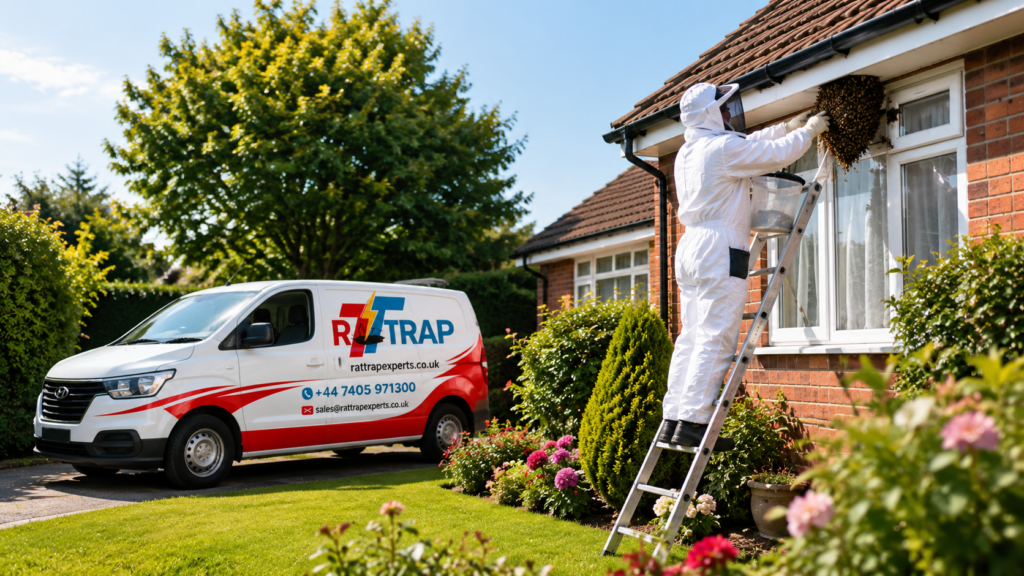
At Rat Trap Experts, our approach to bee swarms prioritises safety for your household first, and the bees themselves wherever possible, since they play a vital role in the local ecosystem. Our technicians:
- Assess whether the swarm can be safely relocated rather than destroyed
- Use safe, humane methods appropriate to where the swarm or nest is located
- Identify entry points if bees have already begun nesting in a wall or roof void, and advise on sealing them once the colony has been dealt with
- Provide child-safe, pet-safe treatment where removal (rather than relocation) is necessary
We’re based locally at 211 Grafton Road, Dagenham, and respond quickly across Dagenham and nearby areas including Romford, Ilford, Barking, Hornchurch, and Rainham. You can also check out our latest projects and completed work on Instagram to see the services we provide. From bee and wasp removal to a wide range of other pest control services, our team provides fast, professional, and reliable solutions.
FAQs
Are bee swarms dangerous? A resting swarm is usually calm, since the bees have no hive to defend. However, they can become defensive if disturbed, so it’s best to keep your distance and avoid provoking them.
Will the bees go away on their own? Sometimes — a temporary swarm may move on within a day or two once scout bees find a permanent nesting site. If they’ve already begun entering a wall or roof cavity, they won’t leave on their own and need professional attention.
Is it illegal to kill bees in the UK? Honeybees and bumblebees are protected as important pollinators, and many pest controllers will prioritise safe relocation over extermination wherever the situation allows it.
How much does bee swarm removal cost? Costs vary depending on the swarm’s location and accessibility. Contact Rat Trap Experts directly for a fast, fixed-price assessment for your Dagenham property.
How is a bee swarm different from a wasp nest? Bee swarms are usually temporary clusters of bees without a fixed nest yet, while wasp nests are established, papery structures that wasps actively defend. The two require very different removal approaches.
Call us now: +44 7405 971300 or get in touch online for fast, friendly advice on your specific situation.